Folkestra in Denmark

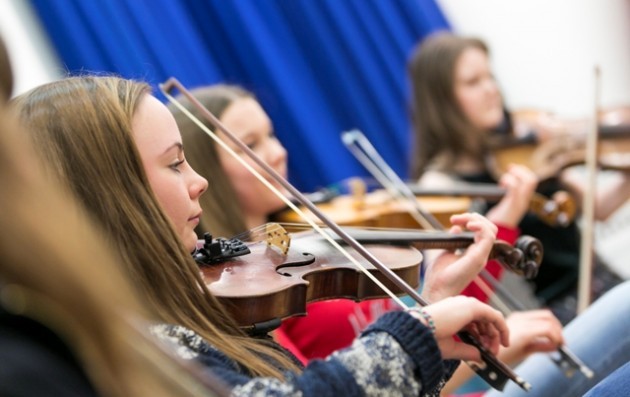
Folkestra is Sage Gateshead’s regional youth ensemble for folk music for musicians ages 13-19. This is a long winded way of saying they are a band of brilliant and enthusiastic young folk musicians. The idea formed when Folkworks was still independent and Kathryn Tickell ran the band for many years before stepping down in 2015.

At the same time as recruitment for the new Musical Director was taking place we still had an ensemble to run, and I made the decision that I was not going to put myself in for the job and therefore I could be the caretaker MD.  I didn’t want the young people, who were very much involved in the recruitment process, to have to pick between someone they were potentially currently working with and someone new. I didn’t want them to have loyalty as an emotion in the process.

The byproduct of being so righteous was that I had the most brilliant time working with the group! One of the things I was very keen to do was to get them to have a trip abroad. I wanted them to not only go somewhere and play their own music in concerts but to have an immersive trip with real connection to the musicians, music, and cultures of the place we went. So I started talking to Kevin Lees about it all. Kevin and I have been friends since we met at the Folkworks Summer School in our youth! Kevin had a year abroad in Odense while on the Folk Degree, this turned to two years before he came back, finished the course, and moved to Odense to do his masters in Denmark. His fiddle playing is a beautiful mix of Northumbrian and Danish now. He told me about a Danish youth group but unfortunately it wasn’t the right time for them to work with us and so Kevin and I agreed that Folkestra would work with his band, D:UK (pro. Duck). It’s worth mentioning that Kevin was a member of Folkestra himself when he was younger and he knows what they need and want from personal experience. What a brilliant time we had. Folkestra worked with the band for three days and did two concerts. They worked to a professional standard learning an awful lot of repertoire in those short three days. They danced with Noa, and more importantly they danced with each other. ‘The Noa Bounce’ because a legitimate phrase to describe the tempo and groove of a piece (‘don’t forget the Noa bounce!’). They explored a very beautiful and small city, were invited into the international school for lunch, rehearsed and gigged in the student house, and by the end of the trip I really do believe they felt immersed and at home in Denmark. The trip may have been one of the most rewarding things I have ever planned and delivered (apart from the Folkworks Summer Schools but they weren’t my idea in the first place! I wish I could take that credit!!!)

odense

Not long after returning from Denmark the band were interviewing for their new MD and we appointed Ian Stephenson who took over from Christmas. I was really very sad to hand them over. I didn’t think I would grow quite so attached as I did in that short term.

Jane Oxnard has written about their trip for the English Dance and Song magazine, the first in their new youth voice series. If you are interested, or know anyone who may be interested, in joining Folkestra please follow this link.

EFDSS Folkestra


The Thoughts of a Choir Leader (pt 1)

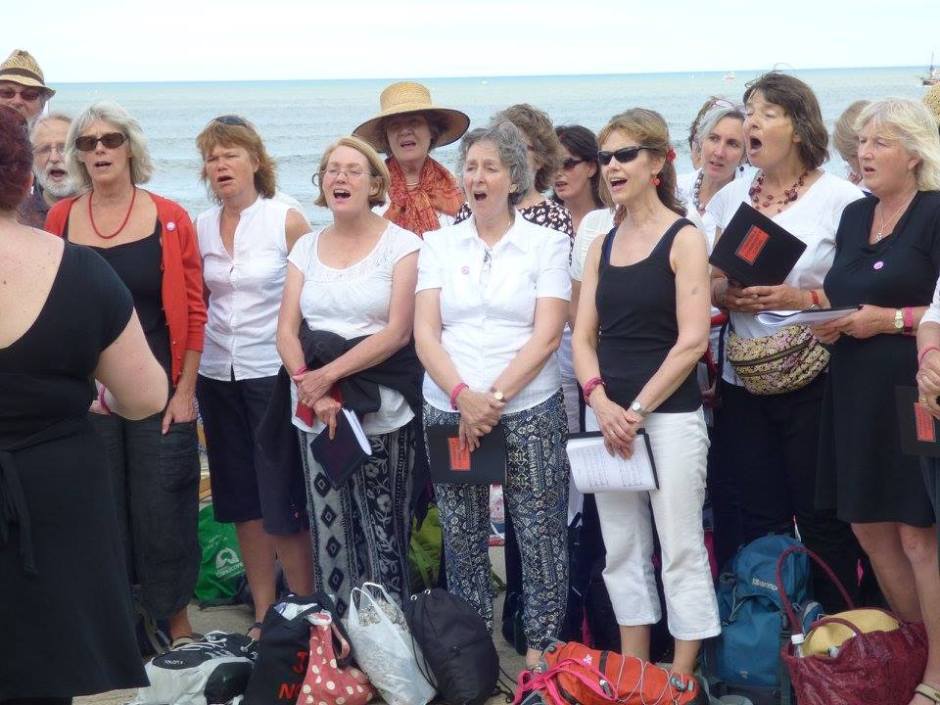
I believe that some people think all I do is stand at the front, wave my arms a bit, sing at people and this incredible sound comes back at me! There is a bit more to it than that and I thought I’d share my thought processes for how I pick and arrange music for my groups.

I start planning the term based on what the steering group/ committee/ boss has told me the activities are to be. For come groups this means looking at the concert schedule and picking the repertoire appropriate for that concert, for others it means planning what events we might do. Some groups have two or three concerts/performances each term, another group has one community coffee morning at the end of the term.

Sometimes finding repertoire is as easy as opening a book and thanking the author over and over for such a great arrangement at the flick of a page, other times it can involve finding a poem and writing the melody and harmonies from scratch.. The latter is much more common than the former! That’s the very fun and creative part of my job… it’s also the time consuming bit! I try to have about 2/3 of the repertoire that is needed ready before the start of term. I don’t tend to have it all ready because things change, events change. If we have 2/3 new material and an event changes, or the group take much longer than anticipated to learn something then we can use 1/3 of older material that just needs a little polish up.

I tend to do a mixture of tiny, short and medium songs. Community choirs aren’t wonderful at long songs. That isn’t because they won’t like them, it isn’t because they won’t try their best and have a go but a long song is either repeat after repeat of the same material (in which case it’s a bit musically boring and the idiosyncrasies in the words of each verse are tricky to manage) or it is different music for each verse which is incredibly difficult for non-music-readers or those who read a little bit to manage. Also, a long song is not ‘value for money’. You have to spend lots of time learning it but it still only lasts around 5 minutes where as you can do two short songs in that time. What we get out of a song vs what we put in to a song is very important.

Choirs need a sense of satisfaction… to have sung something and sounded brilliant. They need to make a great noise quickly in the term. They also need a challenge, but a challenge they can succeed at. Once or twice I have pushed a choir too hard and the result is heart breaking for all concerned. They feel that they have let you down, while you know that your choice has let them down.

How I arrange material directly impacts the enjoyment and satisfaction rating of choirs. As I’m a soprano I naturally give the tops the tune and work downwards in part creation… This was fine for a year or two but it can lead to boring arrangements. Basses are more than just drone singers, more than just the root and the fifth. Similarly if tenors get stuck ‘filling the gaps’ it’s disempowering because those parts are difficult and not particularly musical, not intuitive. So now I take my melody and pick a key for it, if it is within alto, tenor, or bass range then I give the melody away to one of those parts. Oh, I should say that within a community choir the basses are more like baritones, the tenors can have men and women, and the sopranos are mezzos. Bass range is somewhere around an octave from G-G, tenors are around a lower F to a high A (that is pushing the men!), altos manage low A to a C, and sopranos are about a middle C to a high E. The range is quite close together. It makes for lots of close harmony!

I’m a folk musician, I will always have folk music in my veins and I don’t compose or arrange in a western classical manner. I like to arrange ‘live’ where I make a part and give it to someone and then carry on to make another but that requires patient friends with time on their hands so a lot of the time I use RecTools, GarageBand etc. I stick my headphones in, record the melody and then add tracks from there. When I try to compose using Sibelius and put it straight in to the computer I create unnatural lines, they are either boring or hard to sing (and not in a good way). I like to create harmony that weaves between parts, parts that cross each other and create different timbre because of that, parts where the melody isn’t always where you expect it.

Because my arrangements are ‘hand made’ and often not notated it gives me freedom and flexibility to change things if they don’t work with a larger group (for example if I’ve given altos and tenors the tune but kept the sopranos low in their voices then there may be no way to boost the volume of the soprano part and so the logical thing is to move the soprano part to the altos, leaving the tenors on the tune, and create a new soprano part). I think my choirs are sympathetic when ‘tweaking’ happens because they know the effort and thought that goes in to creating arrangements for them. This does only happen sometimes!!

For any choir member reading this… this is always my aim and intention… I’m not claiming to always succeed!

Glasgow, Students, New Ways of Working

Last academic year I went up to Glasgow and  worked with a whole load of great musicians from the Scottish Music course at the Royal Conservatoire of Scotland. We worked on singing together, creating great harmonies together and all of the things you want a group of singers to do. This was really useful for them as singing together as one big group was new. It was also, probably, quite nerve-wracking for some of them who don’t identify as singers at all… they are instrumentalists of amazing skill but some of them won’t have used their singing voices much. I then led a smaller session with principle study singers looking at how we start to create harmony, how we become harmony singers.

The Conservatoire had asked me to go up because they were looking at the structure of the course and how to get more singing, more song studies, more vocal creativity in to the course. I had absolutely nothing to do with what they have now come up with… though I wish I could claim some credit because I think it is brilliant.

Over the period from my first visit to the start of the 15-16 academic year the course director, Josh Dickson, and tutors, Lori Watson, Jenn Butterworth, Mairi MacInnes, have developed a fantastic new module for the Traditional Music BMus (the only BMus in Traditional music in the UK). I’ve been up twice in the last month to work with the students. I hope they learnt something and had a good time in the process, I had a blast!

The Sang Scuil (Scots), Sgoil nan Oran (Gaelic), Song School (English) is a module for first to third year Trad students. The point is to enrich the understanding of the students about Scots and Gaelic song regardless of whether you are a principle study singer or not. Now this could have very easily taken the form of a choir where a tutor waves their arms at the front and music comes back but they haven’t gone the easy route, they’ve gone for a much deeper, much more authentic, much more useful method. Some of the music involves a tutor standing at the front waving their arms but that is because in order to sing songs you have to learn them, but more of the session is about what the song means: where it is from, what the point it, how to emotionally engage with the material, and how to creatively compose harmonies.

When I say they learn ‘what the song means’ I mean this two-fold. They do emotionally study the ‘point’ of the song, are the lyrics figurative or literal, is it a happy or sad song, how do we communicate these things with an audience. But they also look at pronunciation, language acquirement, accent, intent. Some of the singers are not Gaelic speakers yet everyone learns to sing in Gaelic and to understand what those words mean. This informs a deeper vocabulary and the tutors make sure that songs are chosen for their musical and linguistic usefulness.

This method of working is tricky for tutors. It’s much easier to have a very disciplined space that is more like a formal choir practise than it is to run group singing/ language class/ song discourse/ creative space all in one session but the students at the RCS have a real opportunity for something special. The tutors have the want and ability to facilitate musical magic. Independent group learning on four fronts all at the same time!?

It was a real treat to go up and work with the students but it is even more rewarding to get to co-deliver with some exceptional musicians, lecturers, academics in this field. It’s satisfying to have discourse around learning environments, around gentle facilitation, around discipline and the expectations of the students within the space, and to see the fruits of their communal work too.

They really could have taken the easy option and the world would have thought that was fine. Instead they are challenging perceived norms of linguistic, cultural, musical education and encouraging the students to do the same. Brilliant!

You can find out more about the course by clicking here.

A New World

It’s taken me a few weeks to sit down and write, but I left my role at Sage Gateshead on 31st March 2016. I’d been with the company for 10 years, and three years before that as a Folk Degree student… and two before that as a Folkworks Summer School participant. This was a huge decision for me to make but it is one that was right. I’m ready for new and different adventures and I guess this website is part of that journey!

So what have I done with myself since leaving!? Well I went to the Isle of Skye, where I feel so ridiculously at home it’s unfair to wrench myself away when it’s time to come back to England. We had a week of beautiful walks and excellent food and great company. There were six of us in total and three dogs.

IMG_5600

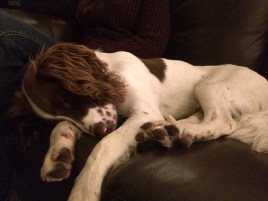
After that I’ve been walking Henry, our cute springer spaniel, lots and wondering what to do with myself!

IMG_2860

I’ve also been talking to some schools and getting some work set up ready for September. I’ve still got some availability so don’t be shy!

I’m learning to be a massage therapist… you weren’t expecting that now were you!! I’m hoping to be fully trained by September. I’m getting trained two ways, one is by a registered course which will mean I am qualified and insured… but my real training is happening by amazing massage guru, hypnotherapy wonder, nurse, etc. etc. etc. Sarah Imeson Jackson. That’s keeping my brain busy!

I’m still leading West End Voices, Tynedale Community Choir, and Song Reivers so there isn’t too much lounging about!

I’ve had the real pleasure of guest teaching at the Royal Scottish Conservatoire up in Glasgow. I’ve been twice recently working alongside Lori Watson and Mairi MacInnes leading the Song School/Sang Scuil/Sgoil nan Oran. I have so much to say about how good this is I will actually do a whole new blog about it later in the week.

I’d better go, I’ve got two orange cakes to ice!
Kathryn